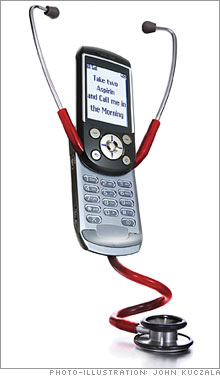
Medicine goes 2.0Consumers can now take cell phone pictures of their meals for nutritional consultations. (Business 2.0 magazine) -- Can camera-equipped mobile phones make families healthier? One Canadian company says yes. Quebec-based Myca already has a hit with a service called MyFoodPhone, which lets users snap photos of their daily meals and send them to the company's nutritional analysts. Now it's set to release Doctorphone and Babyphone, two services that offer patients and parents instant videoconferences with physicians via cell phone.
Myca is a pioneer in what you might call Telemedicine 2.0. It started modestly with MyFoodPhone. For $10 a month, subscribers get biweekly videos via e-mail offering personalized dietary suggestions based on their phone snapshots. Launched in May 2006, it's already landed more than 5,000 customers. Doctorphone and Babyphone, both still in development, are more ambitious. Both will let subscribers conference with Myca's network of freelance nurses and doctors. Heart rate and temperature data can be transmitted to a patient's electronic medical-record file, and doctor-patient conversations are archived for future reference. The fee for these services will likely be billed by the minute. In return, Myca will handle billing with insurance companies - at least for the 10 percent of U.S. health-care plans that reimburse physicians for video visits. Myca CEO Jos�e Morin says that once patients experience the service, insurance firms will follow. Until then, she says, "the first product needs to be consumer paid." This is not the only mobile health-care service - Motorola (Charts, Fortune 500) is developing a phone that will send biometric data to doctors, and HealthPia America launched a diabetes-monitoring phone. But analysts think Myca's business plan looks healthier. "All telemedicine looks tremendous on paper," says Steve Tobin, a health-care IT analyst with research firm Frost & Sullivan. "But you're adding value if you can actually accelerate access to a physician." |
Sponsors
|