CNNMoney.com
Companies Economy International Corrections Pre-market Trading After-hours Trading Winners/Losers/Actives Bonds Currencies Commodities World Markets Money Magazine Real Estate Taxes Jobs Ask the Expert Money 101 Autos Mutual Funds The Help Desk Loan Center Best Places to Live Ask the Expert Ultimate Guide to Retirement Retirement Calculators Best Funds Best Places to Retire Fortune Brainstorm Tech Apple 2.0 Blog Big Tech Blog Sectors and Stocks Tech Talk Resource Guide Small Business Makeovers Questions & Answers Small Business Video 100 Best Places to Launch FSB 100 Fortune Small Business Fortune 500 Brainstorm Tech Investing Management C-Suite Rankings Main Create Portfolio Edit Portfolio Create Alerts Edit Alerts

How inflation changes saving rules

If prices keep rising, you may need to rethink how to take care of your money and where to put it.

EMAIL  |   PRINT  |   SHARE  |   RSS
 
google my aol my msn my yahoo! netvibes
Paste this link into your favorite RSS desktop reader
See all CNNMoney.com RSS FEEDS (close)
By Marlys Harris, Money Magazine senior editor

CLICK HERE
CDs & Money Market
MMA 0.96%
$10K MMA 1.03%
6 month CD 1.06%
1 yr CD 1.54%
5 yr CD 2.55%

Find personalized rates:
 

Rates provided by Bankrate.com.

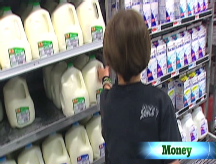
(Money Magazine) -- If prices keep rising, you may need to think differently about a few things. Have you seen the price of milk lately? It's up 13% since last year.

The pain isn't only at the supermarket, however. Hospital costs are up 8%; gas, 33%; and prices overall climbed 4% (vs. less than 3% annually over the past decade). Plus, with the Fed pumping money into the economy, the price pinch probably isn't improving soon.

No wonder inflation ranked as the No. 1 financial worry in a recent CNN/Money poll. While we're nowhere near the 1970s - yet - it's a good time to review how inflation changes the rules.

Rule 1: You can lose by saving

A one-year CD now pays 1.97% a year on average. At 4% inflation, you lose 2% a year before taxes. Best strategy: Shop for top savings rates. Keep bond and CD maturities short.

Rule 2: Stuff beats paper assets...on paper

When inflation is high, tangible goods - gold, oil, gems, art, wheat, even canned tuna - tend to have an edge over securities, especially bonds.

Reason: Because of their rarity, beauty or usefulness, these items have an intrinsic worth that doesn't change, even as paper money loses value.

That said, the market's evaluation of their intrinsic worth varies wildly - for many commodities, it's dangerously exuberant right now. Also, the cost of insuring and maintaining things like art eats into any profits.

Rule 3: Fixed-rate debt is your friend

Here's why: You repay a fixed number of ever-cheaper dollars. Not so with variable-rate loans like ARMs, HELOCs and - worst of all - credit cards.

Issue #1 - America's Money: All this week at noon ET, CNN explains how the weakening economy affects you. Full coverage.

Under the government's economic stimulus plan, 130 million people will receive tax rebate checks for $300 and up, starting this week. What do you plan to do with your check? How do you think the stimulus plan will affect the economy? Send us your photos and videos, or email us and tell us what you think.

Don't let your retirement well run dry

Death of stocks? Reports are greatly exaggerated

Send feedback to Money Magazine To top of page

Features
Markets Last Change
Dow Jones 10,388.90 22.75 / 0.22%
Nasdaq 2,194.35 21.21 / 0.98%
S&P 500 1,105.98 6.06 / 0.55%
10-year Bond 99 5/32 Yield: 3.47%
U.S.Dollar 1 euro = $1.485 -0.020
December 4, 2009 4:14 PM ET
CompanyPrice% Change
Big Lots Inc 27.94 18.69%
OfficeMax Inc 12.61 15.05%
BlueLinx Holdings Inc 2.99 12.41%
Kelly Services Inc 11.58 11.67%
Dec 4 3:53pm ET †
Holiday gifts for the yoga nut These 7 small brands are helping fuel a booming yoga industry. More
Best of the L.A. Auto Show Fuel economy is the name of the game in Southern California. More
Are things really getting better? Last quarter, the economy grew by the largest amount since the summer of 2007, but there are signs that things are still getting worse. More


© 2009 Cable News Network. A Time Warner Company. All Rights Reserved. Terms under which this service is provided to you. Privacy Policy
Copyright © 2009 BigCharts.com Inc. All rights reserved. Please see our Terms of Use.
MarketWatch, the MarketWatch logo, and BigCharts are registered trademarks of MarketWatch, Inc.
Intraday data provided by Interactive Data Real-Time Services and subject to the Terms of Use.
Intraday data is at least 20-minutes delayed. All times are ET.
Historical, current end-of-day data, and splits data provided by Interactive Data Pricing and Reference Data.
Fundamental data provided by Morningstar, Inc..
SEC Filings data provided by Edgar Online Inc..
Earnings data provided by FactSet CallStreet, LLC.