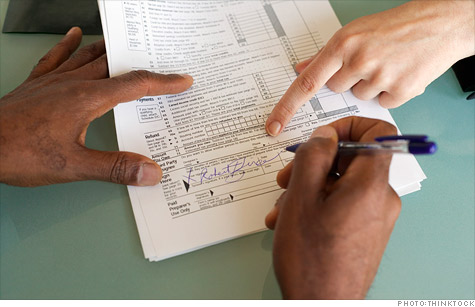
Changes ahead for state taxes in 2012.
NEW YORK (CNNMoney) -- While the fate of the payroll tax extension is still uncertain on Capitol Hill this week, at least some Americans can look forward to tax breaks at the state level when 2012 rolls around.
The cuts are coming despite the fact that state finances in many areas remain under pressure. Although the U.S. economy has shown some recent signs of life, states will still be dealing with billions of dollars worth of total deficits for at least the next few years.
Still, some governments are finding ways to cut taxes. In Oklahoma, the personal income tax rate for most people is set to drop from 5.5% to 5.25% next year, while in Massachusetts, it will creep down from 5.3% to 5.25%.
In Oregon, the income tax for wealthy individuals will drop from 11% to 9.9%, following an increase from 9% a few years ago. In New York, a new income tax plan announced earlier this month includes broad cuts, with the middle-class tax rate set to be slashed by 0.40%.
In other places, of course, state governments have moved to shore up revenues. Connecticut is increasing the corporate income tax on large businesses from 8.25% to 9%, and California will likely pass increases in the sales tax and the income tax for high earners next year, said Kim Rueben, a public finance economist at the Tax Policy Center.
A number of states have also approved new taxes on cigarettes and alcohol and have allowed the expansion of gambling in order to raise revenues, according to auditing firm KPMG.
"It's hard to say if there's an overall trend," said Mark Robyn, an economist with the Tax Foundation. "Some states are recovering more quickly from the recession and the effects that had on their budgets, and others are still struggling."
On corporate taxes, several states have approved new cuts. West Virginia's corporate income tax rate will drop from 8.5% to 7.75% next year and will continue dropping to 6.5% by 2014, assuming certain revenue conditions are met. In Indiana, the current rate of 8.5% is scheduled to drop gradually to 6.5% in 2015.
Different political winds, Robyn said, may lead to different policy outcomes even in states where economic conditions are similar. Some states under fiscal pressure may attempt to cut taxes and grow their way out of distress, while others see tax increases as the best way to fill revenue holes.
Looking ahead, the expiration of federal stimulus aid, stubborn unemployment and continued trouble in the housing market mean states will have to proceed cautiously in projecting future revenues.
"There are certain places that shouldn't be cutting taxes that are because they're trying to make a point, and what it's going to end up looking like when their budgets actually come due might be questionable," Rueben said. 
| Overnight Avg Rate | Latest | Change | Last Week |
|---|---|---|---|
| 30 yr fixed | 3.80% | 3.88% | |
| 15 yr fixed | 3.20% | 3.23% | |
| 5/1 ARM | 3.84% | 3.88% | |
| 30 yr refi | 3.82% | 3.93% | |
| 15 yr refi | 3.20% | 3.23% |
Today's featured rates:
| Latest Report | Next Update |
|---|---|
| Home prices | Aug 28 |
| Consumer confidence | Aug 28 |
| GDP | Aug 29 |
| Manufacturing (ISM) | Sept 4 |
| Jobs | Sept 7 |
| Inflation (CPI) | Sept 14 |
| Retail sales | Sept 14 |