

CNNMoney.com
Companies Economy International Corrections Pre-market Trading After-hours Trading Winners/Losers/Actives Bonds Currencies Commodities World Markets Money Magazine Real Estate Taxes Jobs Ask the Expert Money 101 Autos Mutual Funds The Help Desk Loan Center Best Places to Live Ask the Expert Ultimate Guide to Retirement Retirement Calculators Best Funds Best Places to Retire Fortune Brainstorm Tech Apple 2.0 Blog Big Tech Blog Sectors and Stocks Tech Talk Resource Guide Small Business Makeovers Questions & Answers Small Business Video 100 Best Places to Launch FSB 100 Fortune Small Business Fortune 500 Brainstorm Tech Investing Management C-Suite Rankings Main Create Portfolio Edit Portfolio Create Alerts Edit Alerts

Remembering Black Monday

On Oct. 19, 1987, the Dow fell 22.6% in a single day - a terrifying collapse that resonates anew in today's shaky market. We asked ten veterans of the crash to share their memories of what it was like and the lessons they learned.

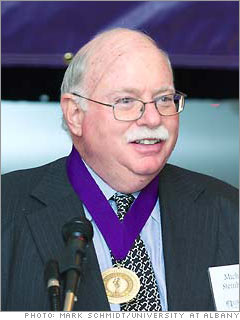
Michael Steinhardt
Michael Steinhardt
Founder of hedge fund Steinhardt Fine Berkowitz & Co.
In April of 1987 I told my investors in a letter that the market was too hot and fraught with danger. I gave all sorts of reasons why I was out of the market, but by the time the fall came around, guess what? I was back in. Dumb as dumb.

I always tend to be a little bit of a contrarian, for good or for bad, and so even though the market was getting shellacked, I was buying on the way down that day. I had orders in to buy the S&P futures. Every ten points down I was buying ten S&P futures, so as the market went down I continued to buy some on a regular scale, but I was buying them too early. My purchases were profitable looking out three or four months, but when that day was over I was shocked at the amount of money I had lost.

That decline, more than any other I know of before or since, was a failure of the internal mechanisms of the market to function properly. It was not the stock market predicting a severe recession or something like that. It was simply the fact that all sorts of new instruments - portfolio insurance and other devices - had been introduced, and the market was not prepared to deal with them and it got clobbered. It ended, there was no recession, and life went on. It was a most peculiar internal event. I can't say I recognized it on that day, but I recognized it soon thereafter.

John Phelan

Elaine Garzarelli

Michael Steinhardt

Bill Rudin

Jim Cramer

Fred Joseph

Muriel Siebert

Ted Weisberg

Robert Hormats

Nicholas Brady
A brief history of fear A century before the crisis of '07, there was the Great Panic of '07. What does history tell us? Fear is fanned by uncertainty, dubious values, confounding innovations and the lack of a towering leader. Sound familiar? (more)
Crisis Counsel Will the subprime lending meltdown and credit crunch send us into a financial free fall? We asked the sharpest minds in business to share their reactions to the downturn, and their insights on the road ahead. (more)
Risk returns with a vengeance For years big players ignored obvious dangers and reaped rich rewards. Now they are paying the price - and so is everyone else, writes Fortune's Shawn Tully. (more)
© 2009 Cable News Network. A Time Warner Company. All Rights Reserved. Terms under which this service is provided to you. Privacy Policy
Copyright © 2009 BigCharts.com Inc. All rights reserved. Please see our Terms of Use.
MarketWatch, the MarketWatch logo, and BigCharts are registered trademarks of MarketWatch, Inc.
Intraday data provided by Interactive Data Real-Time Services and subject to the Terms of Use.
Intraday data is at least 20-minutes delayed. All times are ET.
Historical, current end-of-day data, and splits data provided by Interactive Data Pricing and Reference Data.
Fundamental data provided by Morningstar, Inc..
SEC Filings data provided by Edgar Online Inc..
Earnings data provided by FactSet CallStreet, LLC.