
Sony's China problemWill a lawsuit against sony in china set a scary precedent? (Fortune Magazine) -- Western companies will soon get a sneak peek at an unwelcome coming attraction: Chinese antitrust law. They're hoping it's not a horror show. A Shanghai court heard evidence in January in an antitrust case brought by a Chinese battery company against Sony Corp. and its local partner. When the ruling comes down in six months or so, it might be the first Chinese antitrust ruling ever rendered. The suit was brought by Sichuan Dexian Technology Co., also known as TSUM, in Shanghai People's Intermediate Court No. 1 in November 2004. Dexian's complaint accuses Sony of "monopolization and abuse of its dominant marketing position." The company is challenging Sony's use of an electronic coding feature that, it alleges, forces consumers to use only Sony batteries with Sony digital cameras and videocameras. 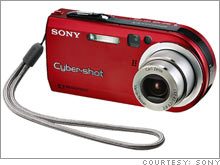 Sony's defense: The system offers technological advantages as well as safety. "We did receive some sorrowful reports of smoke, explosion, burning caused by use of non-Sony batteries on Sony camcorder and digital still camera products," writes a Sony spokesperson in an e-mail. (Last year it recalled four million batteries after discovering flaws that could cause fires in notebook computers.) Dexian filed its suit under an unfair-competition law that has been used mainly to allege fraud or false advertising. But the statute's broad language - requiring companies to observe "principles of voluntariness, equality, fairness and bona fides" - might also encompass antitrust claims. Meanwhile, the National People's Congress has been drafting an explicit antimonopolization law, which is expected to pass within a year. The Sony suit is seen as a kind of test case for how Chinese courts might apply the future law, says Peter J. Wang, a partner in the Shanghai office of Jones Day. Some fear the forthcoming antimonopolization law, however reasonable its wording, will be used to discriminate against foreign companies or curb their intellectual-property rights. Dexian's allegations against Sony (Charts) would probably fail as a "monopolization" or "abuse of dominance" claim in the U.S. or European Union for a simple reason, says Jingzhou Tao, an attorney in the Beijing office of DLA Piper. Canon and Sony each have about 20 percent of China's digital camera market, according to IDC, while Kodak has 14 to 15 percent. "Whether Sony has a dominant position in that market," says Tao, "is far from clear." _____________________ |
Sponsors
|


