|
Calcium: The best heart test?
First it was blood pressure. Then cholesterol counts. But the calcium score could be the number that matters most.
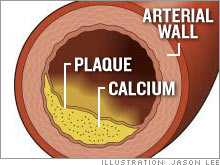
 (FORTUNE Small Business Magazine) - As doctors become more adept at predicting heart attacks, they're paying increasing attention to calcium, whose presence can signal trouble long before a patient feels sick. Atherosclerosis, the most common form of heart disease, occurs when plaque accumulates in the walls of the coronary arteries. Calcium, more than bones and teeth
Plaque can restrict blood flow, leading to chest pain, shortness of breath, and heart attacks. And calcium is a marker for plaque. "The problem with cholesterol is that it indirectly measures health risks - you're looking at someone's blood to see what their arteries are doing," says Dr. Shelton Thomas of Virginia Cardiovascular Specialists in Richmond. "Thirty percent of people who have heart attacks have normal cholesterol. But if you have normal cholesterol and a high calcium score, then we know that you're putting plaque in your arteries. It's the plaque that can kill you."
A heart scan - a painless procedure that takes about five minutes and costs $400 - can tell you your calcium score, which ranges from zero to the low thousands. (Healthy patients generally have scores below 100.) Doctors use one of two types of scanners: MDCT (multidetector computerized tomography), which creates a 3-D image of the body using a ring-shaped bank of spinning X-ray cameras, or EBT (electron-beam tomography), which creates a 3-D image of the heart using an electron gun. Cardiologists debate which machine works better, but for most patients the type of scanner doesn't matter. In some states the procedure requires a prescription, but regardless, it is seldom covered by insurance. For a comparison of the two types of scanners and for a directory of clinics throughout the U.S. that offer body-scan procedures, try scandirectory.com. Plaque causes heart disease but is hard to measure. However, calcium, a marker for plaque, shows up clearly on body scans. A high calcium score means increased risk of heart disease. _______________________________ Executive physicals - and a catered lunch. Click here.
Why is health insurance such an expensive benefit for business owners to provide? Find out. |
|