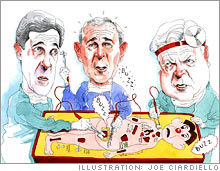
Small biz caught in health care tug-of-warAs Washington digs into health care, will entrepreneurs get cured - or just billed? (FSB Magazine) -- After suffering through years of deadlocked debate in Washington, small- business owners can be forgiven for finally feeling a twinge of optimism when it comes to health care. The newly powerful congressional Democrats are promising relief, and President Bush announced a bold initiative in his State of the Union to level the playing field between large and small employers. But entrepreneurs can also be forgiven for feeling confused. Everyone claims to have their best interests at heart, but which of these plans will really help them? And which stands a chance of passing? The President's plan promises some aid. Today employees who receive health care through their jobs don't have to pay income or payroll tax on those benefits; individuals who buy their own insurance do. This system has traditionally given large companies - which are better able to negotiate and afford health benefits - a huge hiring advantage over smaller rivals. President Bush would replace today's tax break with a tax deduction of $15,000 for families and $7,500 for individuals, regardless of the source of the policy. He says this will make insurance more affordable, while encouraging those with "gold-plated" policies to move toward lower-cost plans. Small-business owners might suffer personally - many would have to pay taxes on their own health policies - but their businesses would be better able to compete for talent against big corporate rivals. (FSB noted the advantages of equal tax treatment in "Unfair Burden" in our May 2006 issue.) But, says Paul Ginsburg, president of the Center for Studying Health System Change (hschange.com), a health-care research organization, the President's ideas represent only the start of a discussion. "There's been no underlying structure that will support the consequences of these changes," Ginsburg says. For one thing, before employees can be turned loose in the individual-insurance marketplace, regulations must be passed to prevent insurers from denying coverage or charging prohibitively high rates to those with chronic ailments such as asthma or diabetes. Critics charge that changing the tax rules will serve as a disincentive for small-business owners to offer coverage. But that's not necessarily a bad thing. It gets small-business owners, struggling with the demands of running their companies, out of the business of managing complicated and costly health-insurance benefits. Small-business owners routinely pay 18 percent higher health-insurance premiums than do large companies, according to a study by the Commonwealth Fund (cmwf.org), a health-research foundation. Early reactions to the President's proposal indicate that, whatever its merits, it is unlikely to be adopted. The Democrats charge that Bush's plan would do too little to solve the problem of America's uninsured. (Of the 47 million Americans without health insurance, 60 percent are employees or dependents of employees who work for small businesses.) "Why would anyone agree to this?" a spokesperson for Senator John Kerry (D-Massachusetts), chairman of the Committee on Small Business and Entrepreneurship, told FSB. "If you have good insurance now, you'll pay more for it, and there's still no guarantee that the most vulnerable uninsured Americans would have access to a quality, affordable insurance option." Much of the Democratic response amounts to political posturing; powerful unions, which pride themselves on their ability to win pricey plans for their members, would be among those hit hardest by the President's proposal. But with a Democrat-controlled Congress, and with Senator Edward Kennedy (D-Massachusetts), an outspoken advocate of universal health care, now at the helm of the influential Health, Education, Labor and Pensions Committee, most observers expect the President's plan to meet a quick death. |
Sponsors
|