


RIM tripped, stock stumbles
BlackBerry maker's second quarter numbers disappoint adding worry to the smartphone success story.
 |
| The launch of BlackBerry's new smartphone, Bold, was originally scheduled for June. Now, it's due in November. |

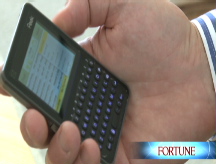
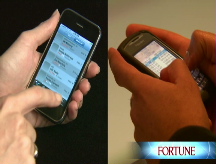
NEW YORK (Fortune) -- Research in Motion missed analysts estimates slightly and guided down for the fiscal third quarter.
The BlackBerry maker posted adjusted earnings of 86 cents a share, up from 50 cents in the year-ago quarter and a penny below analysts' estimates calling for an 87-cent pro-forma profit for the quarter ended last month. RIM sales were $2.58 billion, up from the $1.37 billion level last year and just below analysts' projections for $2.6 billion in revenue.
Looking ahead to the quarter ending in November, RIM (RIMM) expects adjusted earnings of about 93 cents a share on revenue in the $3 billion range. Analysts had forecast a 98 cent profit on $2.94 billion in sales. The company added 2.6 million new subscribers and says it shipped 11 million phones in the first half of the year.
"Our enterprise business remains strong and our momentum in the consumer marketplace continues as we head into the holiday buying season with an amazing product portfolio and solid marketing support from partners," Co-CEO Jim Balsillie said in a press release.
Investors, who have knocked 30% off RIM's share price in the past three months, have been anxious for an update on just how the BlackBerry maker's growing popularity has played against a dour backdrop of spending cuts, job losses and economic uncertainty.
News of the weaker-than-expected financial performance sent RIM shares down 11% in after-hours trading Thursday.
While the quarter's results are the key drama of the moment, it is only one part of the bigger BlackBerry story that captivates investors.
Later this year RIM will introduce four, possibly five new phones that - barring more delays and assuming there is healthy demand - could catapult the company further out of its U.S. corporate niche into the big leagues. Two of the phones, code named Storm and Thunder, are a plunge into the touchscreen design that holds sway in the phone fashions of the moment.
These are somewhat challenging times for tech suppliers as gear buyers turn into cash conservers as the credit crisis spreads. But RIM fans like the BlackBerry's global opportunity and the popularity of smartphones like BlackBerry and Apple's (AAPL, Fortune 500) iPhone despite an otherwise dreary tech market.
Google (GOOG, Fortune 500) loudly entered the scene this week with T-Mobile's introduction of HTC's G1 phone, an Android open-standard powered touchscreen Internet device aimed directly at the iPhone and the BlackBerry. For its part, Apple's telco-subsidized iPhone has become a formidable challenger to the BlackBerry. Not only has it made a splash as a consumer device, but it's also loaded with Cisco security software that can appeal to business users on the Microsoft Exchange e-mail service.
Consider the origins of the humble BlackBerry. The upstart Canadian pager company came late to a game already dominated by giants like Motorola (MOT, Fortune 500) and BellSouth. RIM later fashioned a device that combined a phone with a gray-scale text screen and a bumpy keypad that vaguely resembled a blackberry, hence the name.
RIM's mobile office e-mail became the company's killer app, and an indispensable service to hard-charging professionals on the go.
Showing a deft hand at design, the company made sleeker, thinner phones that managed to stay abreast of the fashion trends. And RIM kept tweaking its business utility by beefing up network security and giving users features like automatic desktop syncing.
With the addition of cameras, music and video players, RIM took a step beyond the business crowd toward the consumer market, at a time when people were shopping for upgrades to their basic cell phones. Despite a slowdown in mobile phone sales to below 10% this year, Gartner pegged smartphone sales in the second quarter at a 16% growth rate.
BlackBerry has cashed in on the trend. RIM now holds 17.4% of the worldwide smartphone operating system market, double the stake it held last year and second only to Nokia's (NOK) Symbian phones at 57%, according to Gartner's second quarter tally.
Looking ahead, investors see a big new product cycle rejuvenation in RIM's future. And with the new phones comes the associated challenges like higher costs and delays that nearly always hamper product introductions, and have already pushed the BlackBerry Bold debut from June to - with any luck - November.
RIM's track record and timing look good and put the company on a threshold of a major leap forward, JP Morgan analyst Paul Coster wrote in a research note before earnings were released Thursday. RIM is in a position "to be a dominant participant in the smartphone market," Coster writes. "And therefore an aggressive entrant into the global Tier 1 handset market, with which we believe smartphones will ultimately be synonymous."
Of course a big spoiler could be the economy, which seems to be on an ominous threshold of its own. 


-
 The retail giant tops the Fortune 500 for the second year in a row. Who else made the list? More
 -
 This group of companies is all about social networking to connect with their customers. More
 -
 The fight over the cholesterol medication is keeping a generic version from hitting the market. More
 -
 Bin Laden may be dead, but the terrorist group he led doesn't need his money. More
 -
 U.S. real estate might be a mess, but in other parts of the world, home prices are jumping. More
 -
 Libya's output is a fraction of global production, but it's crucial to the nation's economy. More
 -
 Once rates start to rise, things could get ugly fast for our neighbors to the north. More









