


(Distributed) power to the people
The fuel cell business is coming of age, at last, led by United Technologies and FuelCell Energy.
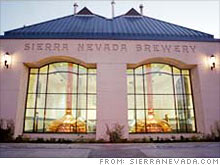 |
| At the Sierra Nevada brewery in San Francisco, a fuel cell runs on waste methane from its water treatment plant. |

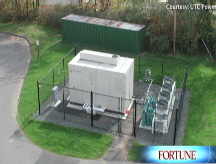
(Fortune) -- Starwood's Sheraton Hotel and Towers in Manhattan, Verizon's call center on Long Island, the Sierra Nevada brewery in northern California and a Whole Foods Market in Connecticut have little in common except this - all are powered by fuel cells that turn hydrogen into electricity, saving energy and reducing greenhouse gas emissions.
Fuel cells, which have been in commercial use since the 1960s, are at last becoming a real business. United Technologies (UTX, Fortune 500) built the fuel cells that powered NASA's Apollo space capsule; the industrial giant, which had revenues of $54.8 billion last year, has been trying ever since to make them cheaper. Government research grants sustained FuelCell Energy, a small firm begun in 1969, for decades when its products were too costly to compete with electricity from the grid.
Now, both firms - they are, by coincidence, Connecticut neighbors - are driving down costs, ramping up production and getting closer to seeing profits. (United Technologies doesn't break out financials for its fuel cell division. FuelCell Energy (FCEL) reported revenues of $75 million and an operating loss of $70 million during the first nine months of this fiscal year.) Executives say that economies of scale should drive down their costs and make fuel cells a sensible option for certain businesses and homes. A federal tax credit of 30% for fuel cells, part of the $110 billion in tax breaks patched onto the financial rescue bill enacted earlier this month, will also be a big help.
Both firms are expanding, and thereby creating the "green jobs" that politicians and environmentalists like to talk about. About 700 people work at UTC Power, and FuelCell Energy employs another 500. Dan Brdar, the CEO of FuelCell Energy, says his firm is making three times as many fuel cells as last year. Jan van Dokkum, president of UTC Power, says, "I can see our way to becoming a $1 billion business in the next few years."
It's about time. The underlying technology has been well understood since the 1800s. A fuel cell combines hydrogen and oxygen in a chemical process to produce electricity, heat and water. Because nothing is burned, fuel cells release substantially fewer pollutants than conventional power plants that burn coal or natural gas. (You can read more here. UTC Power also produces fuel cells for buses and cars.)
Fuel cells do, however, emit carbon dioxide, a greenhouse gas, during the process of making hydrogen. Stationary fuel cells extract hydrogen from fuel sources - traditionally, natural gas or propane and, more recently, renewable waste gases from landfills, sewage treatment plants or food processing plants. "In the U.S., 40 percent of our power plants now run on biogas," notes Brdar. The fuel cell at the Sierra Nevada brewery, for instance, uses waste methane from its water treatment plant as a fuel source.
The fundamental appeal of distributed fuel cells is that they are more efficient than the combination of central power plants and the grid; in other words, they can make more usable electricity from the same amount of fuel. This is partly because they can capture and use waste heat to heat water or to warm or cool buildings. It's also because as much as two-thirds of the energy produced by centralized power plants is lost to the atmosphere as waste heat or during the transmission process.
"You don't throw away 67 cents of every dollar, and that's what we're doing at a big power plant," says UTC's van Dokkum. What's more, because fuel cells are distributed, i.e., on the customer's site, the buyers don't have to worry about losing power.
Cost remains a big issue, however. According to van Dokkum, UTC Power's new 400 kilowatt fuel cell - which is big enough to power a supermarket - can generate power for about 11 to 12 cents per kilowatt hour, assuming a gas price of about $8.50 per MMbtu. Grid-priced electricity costs more than that in New York, New England and California, but less in places that rely mostly on low-cost coal, hydroelectric or nuclear power. If Congress were pass climate-change legislation, that would add to the costs of coal-powered electricity and make fuel cells more competitive.
UTC Power has installed more than 260 stationary fuel cell systems for customers in 19 countries, including hotels, hospitals, data centers, waste water treatment facilities and schools. The systems appeal to those users because they want secure, uninterrupted power and can use the waste heat on site for heating, cooling or hot water. The New York Power Authority has ordered 12 of UTC's 400 kilowatt cells for the Freedom Tower and other buildings going up on the site of the World Trade Center.
FuelCell Energy makes bigger cells - 1.2 and 2.4 megawatts, which can run a large hotel or hospital - and has sold about 80 in all. Its customers include utilities in Korea, wastewater treatment plants, hospitals and prisons in the U.S., and a bakery operated by Pepperidge Farm, a division of Campbell Soup, in a suburb of Hartford. "They have a 24-hour demand for energy, a good use for the waste heat (to bake bread) and a corporate commitment to sustainability," says Brdar.
So go ahead - wash down those Pepperidge Farm Goldfish crackers with a Sierra Nevada pale ale, secure in the knowledge that your carbon footprint is a little lighter than it otherwise would be. 


-
 The retail giant tops the Fortune 500 for the second year in a row. Who else made the list? More
 -
 This group of companies is all about social networking to connect with their customers. More
 -
 The fight over the cholesterol medication is keeping a generic version from hitting the market. More
 -
 Bin Laden may be dead, but the terrorist group he led doesn't need his money. More
 -
 U.S. real estate might be a mess, but in other parts of the world, home prices are jumping. More
 -
 Libya's output is a fraction of global production, but it's crucial to the nation's economy. More
 -
 Once rates start to rise, things could get ugly fast for our neighbors to the north. More









