


Small startup has big plans for Wi-Fi
Meraki hopes to succeed where big players like Google have failed - getting towns to set up wide-area Internet networks

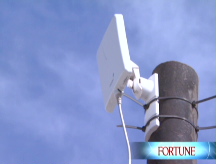
SAN FRANCISCO (Fortune) -- Plenty of big companies - from Google to Earthlink - have tried setting up citywide Wi-Fi networks and failed. San Francisco-based Meraki, a wireless company spun off of a research project at MIT, is taking a different tack.
The startup is launching a $10,000 starter package that allows towns and business districts to build up Wi-Fi networks piecemeal instead of committing to multi million- dollar capital investments. The package includes advice on how to set up a network plus 50 of Meraki's small white routers to provide Internet access to a square-mile area.
"Demand for network access is going up regardless of what's going on in the economy," says Meraki CEO Sanjit Biswas. "But people are looking for smarter ways to deploy these networks."
That's one reason Google - along with Silicon Valley venture capital firm Sequoia Capital and other investors - have poured $25 million into Meraki. They believe that even in a bleak economy, people will still want their Wi-Fi as long as it's relatively cheap and easy to deploy. And while Google's own efforts to deploy citywide Wi-Fi in San Francisco became mired in local politics, the search giant is more than happy to invest in a company that might have a better chance of making the Internet as freely available as air. Why? Because ultimately, the more people click online, the better it is for Google's ad-based business.
Meraki, founded in 2006, says its says its routers have already been sold in 125 countries, including Iceland, Samoa and Chile, where small towns have set up networks. In San Francisco, the company has installed free Internet access in a handful of neighborhoods and low-income housing complexes. Unlike other deployments, it is footing the bill in its hometown in an effort to show off its technology.
Here's how it works: Municipalities, apartment complexes or schools buy enough routers to cover their area, installing them on rooftops and inside buildings. Every fourth or fifth router needs to be hardwired - connected to a DSL line or cable modem provided by the customer. Once they're fired up, the routers form a mini mesh network to broadcast the broadband signal or locate additional routers as they're added. Instead of having to rely on expensive IT professionals to configure the network, most customers can plug in the routers themselves.
Denise Jillson, executive director of the Harvard Square Business Association, a consortium of Cambridge, Mass., small businesses, says she spent two years searching for an affordable way to get Wi-Fi up and running. Finally, she came across Meraki and decided to give the company's routers a try.
"We looked at these tiny units and said how can it possibly do this," says Jillson. "But it has been really reliable."
According to Jillson, 28,000 people have surfed the web using the Meraki network since June. The Harvard Square Business Association paid about $20,000 to get Wi-Fi access across the 48 acres. Meanwhile, the nearby city of Boston has tried to get a $20 million citywide Wi-Fi project going for years - the pricey initiative only covers a small section of the metropolitan area.
But Jillson says Meraki's routers have yet to undergo the toughest test - their first New England winter. "They tell me they can withstand strong wind and below-zero temperatures, so we'll see," says Jillson.
Of course, the tough economy will likely stick around much longer the cold weather, and it's yet to be seen just how Wi-Fi demand will be affected. Even at $10,000 for a network - compared to several million - some potential customers may consider Meraki's Internet routers a luxury rather than a necessity. 


-
 The retail giant tops the Fortune 500 for the second year in a row. Who else made the list? More
 -
 This group of companies is all about social networking to connect with their customers. More
 -
 The fight over the cholesterol medication is keeping a generic version from hitting the market. More
 -
 Bin Laden may be dead, but the terrorist group he led doesn't need his money. More
 -
 U.S. real estate might be a mess, but in other parts of the world, home prices are jumping. More
 -
 Libya's output is a fraction of global production, but it's crucial to the nation's economy. More
 -
 Once rates start to rise, things could get ugly fast for our neighbors to the north. More









