
The wrong-minded auto rescue
Washington is throwing good money after bad with its auto rescue because of a misplaced emotional commitment, contends a veteran auto analyst.



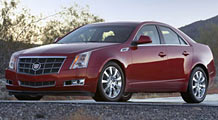

NEW YORK (Fortune) -- Despite talking a tough line today, Washington seems determined to bail out Detroit, despite the objections of the public (61% opposed it, according to a CNN poll in February). The public is correct. Money diverted to a dying industry is taken away from areas with better prospects.
Unfortunately, changing the chairman is only window dressing at this point. Carlos Ghosn succeeded in turning around Nissan (NSANY) because the problem was only stodgy styling and high component costs -- consumers knew the engineering, assembly, and dealers were terrific.
Detroit's problem is not just health care and retirement "legacy" costs. There is another legacy cost that is just as important - decades of bad cars and trucks. Does anyone remember Schlitz? It was the second-largest selling beer in the country as recently as 1976. Then the formula was changed so that it didn't taste as good. Schlitz restored the original formula, but it was too late. Consumers were unwilling to spend a couple of bucks to see if Schlitz was back to premium quality. Budweiser was good enough.
The same thing happened with the new Malibu, the 2008 North American Car of the Year. Only 178,253 were sold in the U.S. last year, not enough to fill even one factory's capacity. Few customers were willing to spend $25,000 to see if it will hold up as well as a Camry or Accord. Within a year of introduction it was being dumped into rental fleets.
Buying a new GM (GM, Fortune 500) car is like being the only person at a party who doesn't get the joke. Chrysler's brands are in even worse shape. Cerberus knows this, which is why it is unwilling to throw good money after bad.
And there are other legacy costs. Big Three dealerships make less than import brands, so they don't have the money to modernize their facilities or to move away from declining downtown locations. Detroit dominates Jerome Avenue in the Bronx. Imports dominate Westchester County.
The same thing happened with car salesmen - the best move to imports, where they have less sales resistance. And if you are a recent engineering graduate, what job would you take, one in Detroit, where finance people run the company and you face a layoff whenever there is a downturn, or at Lockheed Martin, where you can live in sunny southern California?
What difference does it make to American's economy if cars and trucks are built in factories based in the South owned by companies with names ending in vowels rather than in Michigan by GM and Chrysler? If GM and Chrysler go under, most of this lost production will go to Ford (F, Fortune 500) and the transplants. This is because at current exchange rates it costs less to build in the U.S. than in Japan or Germany.
But if GM and Chrysler remain on life support, using government funds to bribe customers to buy their cars and trucks, then it's only a matter of time before Ford joins them. And what good does this do Detroit? Foreign manufacturers are also requesting funds from their governments, which they turn around and use to match Big Three rebates.
The pressure from low-cost foreign manufacturers will only intensify. Car manufacturing is low tech and labor intensive. A new entrant can buy sophisticated components like air bags and electronic engine management systems from parts suppliers and hire design and handling expertise. How long did it take for Hyundai to go from the terrible Excel to the Genesis, the 2009 North American Car of the Year? Korean labor costs are a fraction of Japanese. And Korea is looking over its shoulder at the Chinese. This is why so many Japanese automakers now have factories in China.
Workers will ultimately benefit from switching government funds from subsidizing automakers to retraining for jobs with a future. While Pittsburgh suffered while the steel industry contracted, it prospered after switching to technology and service industries, even adding jobs last year, after we entered a recession.
Auto-parts maker Fram used to have a commercial where a mechanic holding an oil filter faced the camera and said, "You can pay me now or you can pay me later." GM and Chrysler will ultimately go under. It is less expensive to do it now than later, when the cost will be higher because it will also include Ford.
As America struggles to recover its economic bearings, our emotional commitment to the Big Three shouldn't overwhelm the best prospects for the future of the industry and its workers.
Institutional Investor Magazine rated Ronald Glantz the top automobile analyst for seven consecutive years. He recently retired from Pantera Capital Management, a global macro hedge fund. 


-
 The retail giant tops the Fortune 500 for the second year in a row. Who else made the list? More
 -
 This group of companies is all about social networking to connect with their customers. More
 -
 The fight over the cholesterol medication is keeping a generic version from hitting the market. More
 -
 Bin Laden may be dead, but the terrorist group he led doesn't need his money. More
 -
 U.S. real estate might be a mess, but in other parts of the world, home prices are jumping. More
 -
 Libya's output is a fraction of global production, but it's crucial to the nation's economy. More
 -
 Once rates start to rise, things could get ugly fast for our neighbors to the north. More









