
Expensive homes miss the recovery
The housing market may be showing signs of life, but you wouldn't know it by all the high-end inventory sitting around.



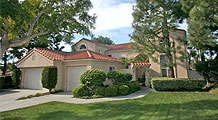
NEW YORK (Fortune) -- In recent weeks, mortgage brokers, bankers, and even Fed Chairman Ben Bernanke have been talking about a housing rebound later this year. And the figures seem to back up their optimism: New home sales rose 11% in June for the third consecutive month.
But for San Diego-based broker Tricia O'Brien, the recovery has been uneven at best. Her mid-size, mid-priced homes are selling at close to their listing price within a week -- but larger, luxury homes aren't moving at all.
One five-bedroom bungalow by the beach has been hanging over her, at $1.2 million, since January. The owners, who bought the house as a second home, aren't willing to lower the price, but they need to sell it to pay off debt borrowed against it during the boom. In the meantime, they're renting the place out to their own children.
"We are advising sellers, if they aren't going to be willing to drop the price significantly, that we just won't take their business," says Las Vegas Realtor Andrea Wells, who has had similar experiences. Otherwise, "it costs too much for us to try."
The combination of sellers' reluctance to lower prices and the lack of buyers has led to a significant overhang in inventory.
"Right now it's taking 20 to 40 months [to sell a high-end home], says Pat Lashinsky, CEO of Emeryville, Calif.-based brokerage firm Zip Realty. "Not because there are so many more homes, but because so many fewer of them are selling."
And the supply of high-end homes is growing.
At the current pace, today's inventory of homes priced at more than $750,000 would take 16.8 months to sell, compared with about 14.5 months a year ago, according to the National Association of Realtors. That's nearly double the overall housing market supply of 9.4 months.'
This overhang is pushing prices down. For example, the median sale price for a home in New York City suburb Greenwich, Conn., fell by 24% to $1.5 million this year as sales declined by more than half, according to Prudential Connecticut Realty.
There are three major causes for the high-end housing glut. First, buyers who make more than $75,000 a year aren't eligible for the government's $8,000 tax credit for first-time homebuyers. Second, the jumbo mortgage market (loans for homes priced more than $417,000 in most cities -- up to $729,750 in high-cost areas) remains tight. And finally, as a result -- and for the first time in recent more than a decade -- Americans are buying smaller homes.
There's a gap in tax policy where housing credits are concerned. An $8,000 tax credit for middle-income, first-time buyers has helped clean out inventories of small starter homes, but no comparable credit exists for wealthier buyers.
What's more, though mortgage reforms passed earlier this year helped bring down rates for mid-priced homes, the jumbo mortgages wealthier buyers need aren't covered by Fannie, Freddie, or the FHA, making Uncle Sam part of the problem, says Lawrence Yun, chief economist for NAR.
"Some of the super-wealthy who are buying homes all-cash are not restricted by mortgage availability," Yun says. "That market is still functioning as normal. Just underneath that, people require jumbo mortgages -- and those they can't get."
That's forcing buyers to go small. A May survey of real estate agents by NAR showed that 73% of buyers traded down because of difficulties getting credit. (Census data shows that U.S. homes shrunk in size last year for the first time since the mid-1990s.)
Where sellers of smaller houses used to graduate into the million-dollar range, many are now staying put. Indeed, says Lashinsky, "since most of the sellers are distressed sellers in short sales, they might move down rather than up."
Mark Fleming, chief economist for real estate data firm First American CoreLogic also sees the problem as one of demand. "[Sale] prices aren't falling," he says, "because prices only fall when there is a realized sale. You can't drop price if there's no demand to meet."
Demand is especially low in places -- like San Diego, Miami Beach, or Las Vegas -- where the oversupply of million-dollar properties reflects a surge in second-home investments during the boom. But with vacation buyers gone, the market must depend on locals, and Fleming believes there's no price point at which locals will buy up those properties --because locals were never the buyers.
For all these reasons, a high-end recovery will come much later than the rebound some analysts are already predicting in the rest of the housing market. J.P. Morgan Chase mortgage-bond analysts estimated earlier this summer that these high-end prices may not bottom out until 2012, when prices will be down 60% from their peaks. 


-
 The retail giant tops the Fortune 500 for the second year in a row. Who else made the list? More
 -
 This group of companies is all about social networking to connect with their customers. More
 -
 The fight over the cholesterol medication is keeping a generic version from hitting the market. More
 -
 Bin Laden may be dead, but the terrorist group he led doesn't need his money. More
 -
 U.S. real estate might be a mess, but in other parts of the world, home prices are jumping. More
 -
 Libya's output is a fraction of global production, but it's crucial to the nation's economy. More
 -
 Once rates start to rise, things could get ugly fast for our neighbors to the north. More









