
An app store for autos
Cars are the ultimate mobile device, so let's make them more like iPhones.



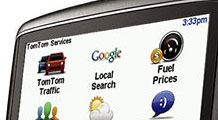
Find your next Car


(Fortune Magazine) -- In my rusted jalopy, a 1991 Volvo 240 sedan, I have installed the future.
A car that stalls at every stop sign now has turn-by-turn navigation. I can check my e-mail and monitor the stock market (or, let's be honest, the day's surf). There are applications at my fingertips that can point my sputtering car toward a burrito -- or the remains of fossilized dinosaurs uncovered nearby. All it took was a friend whose iPhone came along for a ride.
Every car's dashboard needs to take a cue from the iPhone. It doesn't need to be sleek and well designed (though that wouldn't hurt), but it does need to be connected, customizable, and open to thousands of software developers.
Cars are not gadgets; they are for driving, and there is safety to be considered foremost. But when you think about it, the car is the ultimate mobile device. And automakers need to start acting more like consumer electronics companies if they don't want to cede one of their last great opportunities to Apple (AAPL, Fortune 500), Research in Motion (RIMM), or Google (GOOG, Fortune 500).
More screens are showing up in automobiles. Wouldn't it be great if those screens became home to a flood of car-appropriate applications?
I imagine apps that help you, or your newly licensed children, drive more safely. In the same way you have different permissions on a computer, you might have different permissions in a car that toggle from super-performance mode to granny mode, for example. I want an application that monitors my Google calendar and then alerts colleagues of my ETA.
Mostly what I want is for automakers to provide a framework that can bring concepts and people together for product development on a consumer electronics time scale, which means weeks for implementing an idea, not years.
Some of that is happening already. Ford (F, Fortune 500), in partnership with Microsoft (MSFT, Fortune 500), has been offering in its cars its "Sync" platform, which cleverly uses your mobile phone to connect to navigation, entertainment, and other applications. By all accounts Ford is ahead of its U.S. peers. BMW is working with Google. But in all cases the auto industry is making slow progress toward open systems that software developers could access.
An example of what is possible when auto tech is opened up is parked at Stanford University. Volkswagen gave a gang of computer scientists essentially an unlocked (the software, not the doors) Passat wagon. With some sophisticated hardware bolted to the roof and lots of very smart software, these guys now have a car (its name is Junior) that drives itself. I don't care how much you love your smartphone, a driverless car is much cooler.
What the Stanford team has done is break driving down into a computer science problem. They reduced the act of maneuvering a car into software code that, to oversimplify greatly, takes data from a series of sensors and a navigation system and combines the data with certain rules -- stay within a portion of the road -- to create a virtual driver. Some computers in the trunk act as the brains for the car, crunching all the data that gets fed on-the-fly into the driving program.
"Driving" around the Stanford campus in Junior, even on a pre-defined route, is initially an unnerving experience. We human drivers tend to take short cuts when making turns, so the curve is more gentle. Junior was banging left and right turns at what seemed like 90-degrees, almost as if the computer program realized a fraction late that the car needed to make a turn.
A double-parked car along the route added some suspense: Would Junior "see" the obstacle and avoid it? Or ruin some Stanford student's day, and plow into the car? As we slowed and approached the car, Junior deftly turned around it, no sweat.
After just a short while, it became clear we weren't going to hit anything. As I checked my e-mail, watched various gizmos arrayed on the dash, and generally ignored the road, the advantages of having your car drive itself became obvious.
I don't expect to have one parking itself in my garage soon, but Stanford's science project describes the direction in which automakers need to head quickly -- toward openness. If they don't, maybe Apple will get into the car business itself (you thought a phone was improbable), and believe me, they don't want that to happen. 


-
 The retail giant tops the Fortune 500 for the second year in a row. Who else made the list? More
 -
 This group of companies is all about social networking to connect with their customers. More
 -
 The fight over the cholesterol medication is keeping a generic version from hitting the market. More
 -
 Bin Laden may be dead, but the terrorist group he led doesn't need his money. More
 -
 U.S. real estate might be a mess, but in other parts of the world, home prices are jumping. More
 -
 Libya's output is a fraction of global production, but it's crucial to the nation's economy. More
 -
 Once rates start to rise, things could get ugly fast for our neighbors to the north. More









