NEW YORK (CNNMoney.com) -- Toyota is rejecting a university professor's test that claims to show that electronic throttle systems on Toyota cars could cause unintended acceleration saying the test was simply not realistic.
Dr. David Gilbert of Southern Illinois University performed a demonstration of how the problem could occur in an ABC News broadcast in late February. Later, Gilbert testified before a Congressional hearing looking into unintended acceleration in Toyota cars.
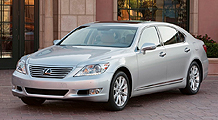
"Dr. Gilbert's demonstration, as shown on the ABC News web site, amounts to little more than connecting three of the six pedal sensor wires to an engineered circuit to achieve engine revving," said Exponent, a research firm hired by Toyota, in a report obtained by CNN that was prepared for Toyota attorneys.
Some safety consultants have alleged that electronic throttle control, or ETC, systems used on Toyota cars are a likely cause of unintended acceleration problems. Toyota has said it is studying the issue but has not found any fault in the electronic systems that would lead to unintended acceleration in real world conditions.
Still, Toyota (TM) has recalled more than 8 million cars for mechanical problems including issues related to the gas pedals.
Gilbert said he had uncovered a potential for a short circuit that could undermine the electronic throttle control system's built in safety checks.
The system used on Toyota cars relies on two separate sensors connected to the gas pedal and another pair connected to the throttle valve itself. In order for the system to work, each sensor in a pair has to match. If they don't match in the proper way, an on-board computer immediately senses a problem and the engine power is reduced to idle or it's shut off altogether.
Gilbert said that he overrode that safety feature, allowing faulty pedal signals to go to the engine with no problem being detected by the car's on-board computer.
Exponent, the research firm hired by Toyota, was able to replicate Gilbert's results but says that the test presents an unrealistic situation that has virtually no chance of happening in the real world.
"For such an event to happen in the real world requires a sequence of faults that is extraordinarily unlikely," the report continues.
Exponent was also able to replicate the same sequence of short circuits, with the same result, in other automakers' cars, which would undercut the allegation that the problem would be somehow unique to Toyotas.
"Every vehicle from other manufacturers tested by Exponent could be induced to respond with a sudden increase in engine speed and power output," Exponent said in a fact sheet. "These demonstrations in no way indicate a defect with any of the vehicles tested (including the Toyota Avalon and Camry)."
A representative for Southern Illinois University said that Dr. Gilbert has already met with Toyota representatives and that more meetings are planned. 





| Index | Last | Change | % Change |
|---|---|---|---|
| Dow | 32,627.97 | -234.33 | -0.71% |
| Nasdaq | 13,215.24 | 99.07 | 0.76% |
| S&P 500 | 3,913.10 | -2.36 | -0.06% |
| Treasuries | 1.73 | 0.00 | 0.12% |
| Company | Price | Change | % Change |
|---|---|---|---|
| Ford Motor Co | 8.29 | 0.05 | 0.61% |
| Advanced Micro Devic... | 54.59 | 0.70 | 1.30% |
| Cisco Systems Inc | 47.49 | -2.44 | -4.89% |
| General Electric Co | 13.00 | -0.16 | -1.22% |
| Kraft Heinz Co | 27.84 | -2.20 | -7.32% |
|
Bankrupt toy retailer tells bankruptcy court it is looking at possibly reviving the Toys 'R' Us and Babies 'R' Us brands. More |
Land O'Lakes CEO Beth Ford charts her career path, from her first job to becoming the first openly gay CEO at a Fortune 500 company in an interview with CNN's Boss Files. More |
Honda and General Motors are creating a new generation of fully autonomous vehicles. More |
In 1998, Ntsiki Biyela won a scholarship to study wine making. Now she's about to launch her own brand. More |
Whether you hedge inflation or look for a return that outpaces inflation, here's how to prepare. More |



