
 Bricks that grow from microorganisms, household garbage turned into art, three-wheeled bike-cars -- these startups are redefining urban living. More
 These five entrepreneurs took their blue collar experience and used it to launch innovative businesses. More
 Whether curating the perfect gift or finding a pet-sitter, these startups offer time-saving services that might just seem like holiday magic. More


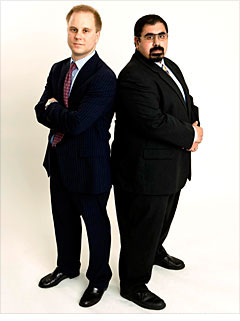

School: Carnegie Mellon University, Tepper School of Business
Team members: Raymond Sekula, Sasha Bakhru
Concept: NeuroBank plans to use proprietary technology to isolate, purify, expand and store adult neural stem cells. The company, through its product NeuroBank, will tap into the market of neurologic disease sufferers who wish to harvest and store their neural stem cells before they deteriorate in quantity or quality due to age or disease.
Therapies that could use such cells to treat diseases such as strokes, epilepsy, multiple sclerosis and more are still many years away. But NeuroBank believes that 13.6 million people currently suffer from illnesses that could be cured using neural stem cells, creating a $4-billion market opportunity for cell storage.
In exchange for each customer's initiation fee, NeuroBank will provide a kit that will allow partner physicians to isolate the neural stem cells. The cells will then be shipped to NeuroBank's processing laboratories. Customers will also pay an annual storage fee. NeuroBank will provide customers with flexible monthly payment options.
The Carnegie-Mellon team is led by Raymond Sekula, a trained neurosurgeon, who is currently pursuing his MBA at Tepper. Dr. Sekula is the company's chief scientist and will also serve as initial CEO.
The company's business plan hinges on its proprietary technology. It is currently awaiting the results of patent applications filed in the U.S. and internationally.
Timeline: At the seed stage, NeuroBank plans to continue with research and expand its intellectual property portfolio. It will develop a commercial laboratory, and build a marketing network through insurance companies. - Candice Zachariahs
NEXT: 4th place: Wirelessly zapping pain
-

qcue -

Klymit -

NeuroBank -

MicroTran... -

Enexra -

HeartSounds -

Etoh Phar... -

AiB Pharma -

Aura Bios... -

AutoTB -

BioRegenix -

Boreas Sn... -

Callinix -

Cerene Bi... -

DiagNano -

Diamas Co... -

Everlight... -

Fantasy A... -

Filigree ... -

Husk Powe... -

HydroCoal... -

Immutell -

Lab Exten... -

Lab802 -

Nolia Ath... -

Perpetual... -

Perseus M... -

Potentia -

Project E... -

Remedium ... -

TechTrix ... -

Traycer D... -

TruSource... -

Vidyut Sh... -

Wine with... -

Zeopane M...

 RSS
RSS